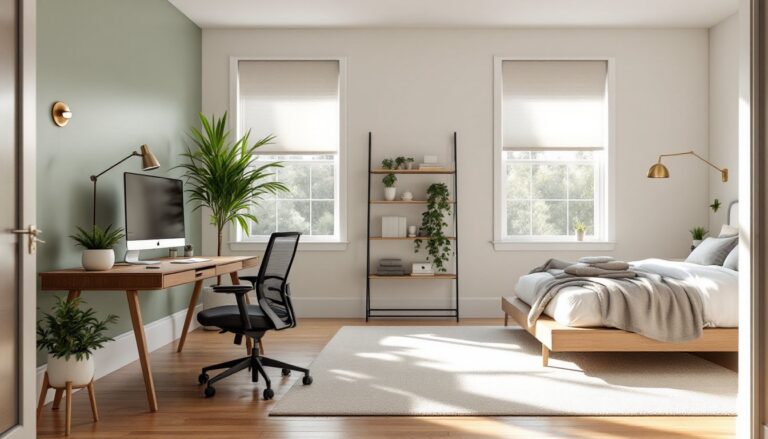
Remote work has become a fixture in modern life, and many homeowners are rethinking how they use their private spaces. The master bedroom has emerged as prime real estate for a dual-purpose layout, one that balances professional focus with personal rest. Done right, this arrangement doesn’t dilute either function: it amplifies both. But poor planning leads to cluttered corners, tangled power cords, and a workspace that bleeds into bedtime. This guide breaks down the spatial principles, furniture choices, and design strategies that make a master bedroom office layout functional, comfortable, and code-compliant for the long haul.
Table of Contents
ToggleKey Takeaways
- A master bedroom with office layout maximizes square footage by consolidating workspace and rest in one room, eliminating the need to sacrifice a guest room or dining area.
- Position your desk perpendicular to windows and away from direct sightline to the bed to minimize glare, reduce eye strain, and maintain a clear psychological boundary between work and sleep zones.
- Use zone separation strategies like area rugs, room dividers, color blocking, or floating desks to prevent the office from visually invading the bedroom and help you disengage at end of day.
- Invest in ergonomic furniture with built-in cable management, adjustable task lighting (3,000K–4,000K color temperature), and adequate vertical storage (12+ linear feet of shelving) to support productivity and comfort.
- Verify electrical capacity with a licensed electrician and add a dedicated 20-amp circuit if your setup includes a desktop computer, dual monitors, and task lighting to safely prevent circuit overload.
- Test your master bedroom office layout with temporary furniture for one week before making permanent changes like painting, built-ins, or structural modifications to identify sightline, ventilation, and workflow issues early.
Why Combining Your Master Bedroom and Office Makes Sense
Square footage is a finite resource. Carving out a separate office often means sacrificing a guest room, dining area, or storage space that families actually use. The master bedroom typically offers the largest uninterrupted floor plan in a home, better natural light from dual or oversized windows, and existing electrical infrastructure that can support desk lamps, monitors, and charging stations without running new circuits.
Privacy is another advantage. Unlike a kitchen-table setup or a corner of the living room, a bedroom office keeps work conversations behind a closed door, critical for video calls or focused tasks. Climate control is already dialed in, and the space is wired for adequate lighting. These factors reduce the retrofit cost and permitting headaches that come with converting a garage or unfinished basement.
This layout also suits the rhythm of hybrid schedules. Workers who split time between home and an external office benefit from a workspace that’s ready when they are, without monopolizing shared areas. As long as the design respects both functions, the combination delivers more utility per square foot than two underused rooms ever could.
Essential Layout Principles for a Master Bedroom Office Combo
Start by measuring the actual usable floor area, not just the dimensions on the listing. Account for door swing radius, closet projections, and any HVAC vents or returns that limit furniture placement. A standard king bed (76″ × 80″) needs at least 36 inches of clearance on each access side to meet basic accessibility guidelines and allow for bed-making.
Electrical capacity matters. Check the bedroom’s circuit load if adding multiple devices. Most bedrooms are on a 15-amp circuit, which can handle around 1,800 watts. A desktop computer, dual monitors, task lighting, and a phone charger together can approach 500–700 watts. If the room already powers a window AC unit or space heater, consider having an electrician install a dedicated 20-amp circuit for office equipment. This isn’t a permit-required job in most jurisdictions, but it does require a licensed pro.
Natural light should drive desk placement. Position the work surface perpendicular to windows to minimize screen glare while still benefiting from daylight. Avoid placing monitors directly in front of or behind a window, both create eye strain. If the room only has one window, mount adjustable blinds or cellular shades that allow fine-tuned light control throughout the day.
Zone Separation Strategies
Physical or visual separation keeps work from invading sleep. The simplest method is spatial zoning: place the desk against a wall opposite the bed, ideally outside the direct sightline from the pillow. This creates a mental boundary that helps with end-of-day wind-down.
Room dividers offer a more deliberate split. A freestanding bookshelf (72″ to 84″ tall, open-back design) anchors the office zone without blocking light or requiring drywall. Curtain tracks mounted to the ceiling allow a fabric panel to close off the workspace at night, an effective option when a productive workspace design emphasizes flexibility. Avoid solid partitions that require framing and fire-block insulation unless the room exceeds 300 square feet.
Color blocking and flooring transitions also reinforce zones. An area rug under the desk (5′ × 7′ minimum) defines the work footprint and dampens chair noise on hardwood or laminate. Painting the office wall a distinct accent color, or using peel-and-stick wallpaper, signals the functional shift without permanent construction.
Popular Master Bedroom Office Layout Configurations
Corner L-desk setup: This configuration tucks the workspace into an underutilized corner, freeing up the center of the room for the bed and circulation. L-shaped desks (60″ × 60″ is a common footprint) provide ample surface area for dual monitors and paperwork without projecting deep into the room. Mount a wall-mounted task light and a pegboard above the desk to keep tools and supplies vertical.
Design experts at Apartment Therapy frequently recommend corner layouts for small bedrooms because they maximize usable wall length. Pair this with a rolling file cabinet that doubles as a printer stand, mobility keeps the layout adaptable.
Window nook workstation: If the bedroom has a bay window or wide single window with good depth, a floating desk (48″ to 60″ wide, wall-mounted at 29″ to 30″ height) transforms the alcove into a dedicated work zone. This approach preserves floor space and capitalizes on natural light. Use #8 wood screws into studs or toggle bolts rated for the combined weight of the desktop and equipment (plan for 150–200 lbs). Many floating desk kits include a ¾-inch plywood or MDF top that spans between two metal brackets: reinforce with a center support if the span exceeds 48 inches.
Behind-the-bed credenza office: In larger master bedrooms (14′ × 16′ or bigger), positioning a low credenza or console table (30″ to 36″ deep, 60″ to 72″ long) behind the bed creates a buffer zone. The desk sits against the back wall, and the bed itself acts as a visual divider. This layout works well when the bed is centered on a long wall, leaving 36 to 48 inches of clearance behind it. Ensure the credenza height stays below the top of the mattress to maintain sightlines and avoid a boxed-in feeling.
Closet conversion micro-office: Reach-in closets (24″ to 30″ deep, 48″ to 72″ wide) can house a compact desk, floating shelves, and a wall-mounted monitor arm. Remove the closet doors, install a countertop-height work surface at 29 inches, and add a tension rod with a curtain for concealment. This solution keeps the office fully hidden when not in use and preserves the bedroom’s square footage. Verify that the closet has an electrical outlet: if not, an electrician can extend a circuit from an adjacent wall, typically a half-day job that doesn’t require a permit in most areas.
Furniture Selection and Placement Tips
Choose desks with built-in cable management, grommets, rear channels, or under-surface trays. Loose cables create visual clutter and trip hazards, and they’re harder to adjust when cleaning or rearranging. A desk depth of 24 to 30 inches accommodates a monitor at a comfortable viewing distance (20 to 26 inches from the eyes) without encroaching too far into the room.
Ergonomic chairs are non-negotiable for anyone spending more than two hours a day at the desk. Look for adjustable seat height (16″ to 21″ range), lumbar support, and a five-wheel base that rolls smoothly on carpet or hard flooring. If the bedroom has plush carpet, a chair mat (36″ × 48″ for stationary desks, 45″ × 53″ for L-shaped setups) protects fibers and improves mobility. Skip glass mats, they crack under point loads and create safety hazards.
Storage should be vertical and modular. Wall-mounted shelving (12″ to 16″ deep) keeps office supplies and reference materials accessible without consuming floor space. Floating nightstands on the bed side free up room for a mobile filing cabinet on the office side. When selecting a home office setup that fits a bedroom, measure twice and account for the clearance needed to pull out drawers and open cabinet doors, typically 24 to 30 inches.
Keep the bed frame low-profile. Platform beds or frames with minimal footboards reduce visual bulk and make the room feel larger. Avoid tall four-poster or canopy beds in a combo layout, they compete for attention with the desk and create a cluttered sightline. Upholstered headboards in neutral tones blend into the background, letting the workspace anchor the design when needed.
Design Elements That Balance Work and Relaxation
Lighting is the linchpin. Overhead fixtures should provide ambient illumination (aim for 40 to 50 lumens per square foot in a bedroom), but task lighting at the desk is what prevents eye strain. A swing-arm wall lamp or an adjustable LED desk lamp (3,000K to 4,000K color temperature) delivers focused light without glare. Install a dimmer switch on overhead lights to shift the mood from work to rest.
Warm tones and soft textures in the bedroom zone counterbalance the harder surfaces of the office area. Linen bedding, a textured throw, and curtains in muted colors (grays, taupes, sage greens) create a restful backdrop. Save cooler tones and harder finishes, metal desk legs, glass monitor stands, for the work zone. Interior design insights from MyDomaine emphasize this contrast as key to maintaining psychological separation in dual-purpose rooms.
Sound control matters, especially for video calls or early-morning work sessions. Area rugs, upholstered furniture, and heavy curtains absorb sound and reduce echo. If the bedroom is above a garage or busy living area, consider adding a dense rug pad or foam-backed underlayment to dampen footfall noise, this is particularly useful if the desk chair has hard casters.
Hide work materials at the end of the day. A desk with a roll-top or hinged cover conceals paperwork and devices in seconds. Alternatively, use decorative baskets or bins on nearby shelves to corral notebooks, chargers, and peripherals. The goal is to prevent the office from visually lingering once work hours end. Many effective office strategies incorporate this principle to maintain work-life boundaries in shared spaces.
Common Mistakes to Avoid When Planning Your Layout
Skipping the electrical audit. Plugging a power strip into another power strip, or daisy-chaining extension cords, is a fire hazard and violates National Electrical Code (NEC) Article 400.8. If outlet access is limited, hire an electrician to add a quad receptacle or install a floor outlet in the office zone. This typically runs $150 to $300 depending on wire runs and local rates, cheap insurance against overloaded circuits.
Ignoring window treatments. Bare windows create glare, privacy issues, and temperature swings. Cellular or honeycomb shades offer insulation value (R-3 to R-5) and light filtering without the bulk of heavy drapes. Blackout liners help with sleep quality, especially if the desk faces east and morning sun floods the room.
Underestimating storage needs. A single drawer and a shelf won’t cut it for most remote workers. Budget for at least 12 linear feet of shelving or cabinet space to handle books, files, and equipment. Wall-mounted solutions keep the floor clear and make vacuuming easier. Those exploring current setup trends will notice a shift toward modular storage that adapts as needs change.
Choosing style over function. A sleek glass desk looks sharp but offers no cable management, limited surface friction, and poor durability under daily use. Similarly, a trendy accent chair without lumbar support becomes uncomfortable after an hour. Prioritize ergonomics and durability, then layer in aesthetics with accessories, art, and textiles.
Overlooking ventilation and climate. Bedrooms on upper floors or above garages can run hot in summer. If adding multiple heat-generating devices (computer, monitors, task lights), verify that the HVAC zone can handle the added load. A ceiling fan with reversible blades improves air circulation year-round without the energy cost of adjusting the thermostat. Avoid blocking return-air vents with furniture, doing so reduces system efficiency and can cause uneven heating or cooling.
Neglecting a trial run. Before committing to paint, built-ins, or permanent furniture, live with a temporary setup for a week. Use a folding table and a basic chair to test desk placement, sight lines, and workflow. This low-cost experiment reveals issues, awkward door clearance, insufficient natural light, noise from adjacent rooms, that are easier to solve before the drywall is patched and the paint is dry. Ideas from home office setup examples show how quick mockups prevent costly redesigns down the line.
Finally, consult resources like Homedit for room-specific design concepts that address both function and aesthetics. Their case studies often highlight real-world pitfalls and practical workarounds that generic advice misses. A master bedroom office layout succeeds when it respects both roles equally, neither work nor rest should feel like an afterthought.