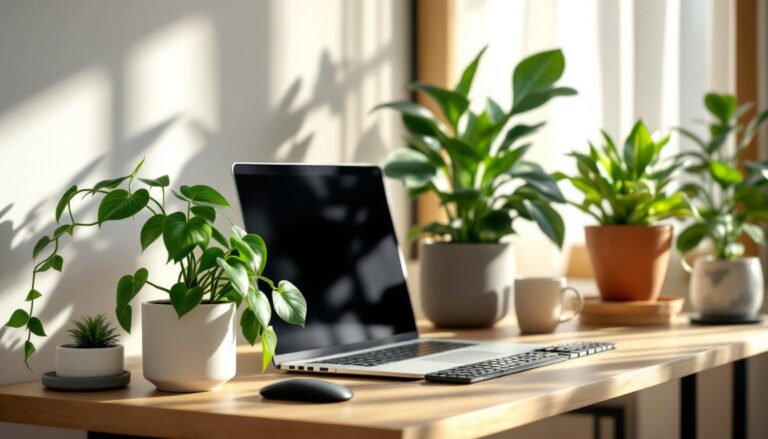
Adding greenery to a workspace isn’t just about aesthetics, it’s about building an environment that actively supports focus, air quality, and mental clarity. Research consistently shows that indoor plants reduce stress, improve air filtration, and boost productivity by as much as 15%. For anyone working from home, selecting the right office plants transforms a desk into a space that feels less like a cubicle and more like a place where real work gets done. This guide walks through the best plants for office environments, how to match them to available light, and the practical care steps that keep them alive without turning plant maintenance into a second job.
Table of Contents
ToggleKey Takeaways
- Office plants reduce stress and boost productivity by up to 15% while filtering harmful air pollutants like formaldehyde and benzene from your workspace.
- Low-maintenance office plants like snake plants, pothos, ZZ plants, and peace lilies tolerate inconsistent watering, low light, and temperature fluctuations common in home offices.
- Match plants to your light conditions: snake plants and ZZ plants thrive in low light, while rubber plants and fiddle leaf figs prefer bright indirect light, and succulents handle direct sunlight.
- Consistent watering is the key to success—check soil moisture 1-2 inches deep and water only when dry, typically every 7-14 days in spring and summer.
- Group plants in odd numbers (3, 5, 7), place them on desks, shelves, or corners, and use vertical arrangements to add greenery without cluttering your workspace.
- Wipe leaves monthly to remove dust, fertilize every 4-6 weeks during growing seasons, and repot when roots emerge from drainage holes or growth slows to keep plants thriving.
Why Office Plants Are Essential for Your Home Workspace
Plants do more than fill empty corners. They actively improve indoor air by filtering out volatile organic compounds (VOCs) like formaldehyde and benzene, common off-gassing culprits from furniture, paint, and electronics. NASA’s Clean Air Study identified several species that excel at this, including pothos, snake plants, and peace lilies.
Beyond air quality, good office plants contribute to humidity regulation. Most indoor environments sit between 30-50% relative humidity, which can dry out nasal passages and irritate eyes during long work sessions. Plants release moisture through transpiration, naturally balancing humidity without needing a standalone humidifier.
There’s also a psychological component. Studies from the University of Exeter found that employees in plant-enriched offices reported 47% higher well-being and 38% higher productivity. The presence of living greenery reduces cognitive fatigue and provides visual breaks that prevent screen-induced eye strain. For home offices where the line between work and personal space blurs, plants create a subtle boundary that signals “this is a place for focus.”
If the workspace lacks natural light or square footage, that’s not a deal-breaker. Many of the best plants for office environments thrive in low-light conditions and require minimal floor space. It’s about matching the plant to the room, not the other way around.
Best Low-Maintenance Plants for Your Home Office
For anyone juggling deadlines and Zoom calls, low-maintenance varieties are non-negotiable. These plants tolerate inconsistent watering, fluctuating indoor temperatures, and limited natural light, common realities in home offices.
Top Picks for Busy Professionals
Snake Plant (Sansevieria trifasciata): Tolerates neglect better than almost any other houseplant. It can go two to three weeks without water and survives in low to bright indirect light. Snake plants convert CO₂ to oxygen at night, making them useful for offices that double as guest rooms. Expect heights between 6 inches and 4 feet depending on the variety.
Pothos (Epipremnum aureum): Grows in water or soil, handles low light, and cascades beautifully from shelves or filing cabinets. Pothos roots aggressively, so if a stem breaks off, it can be propagated in a glass of water within two weeks. Water when the top inch of soil feels dry, usually every 7-10 days.
ZZ Plant (Zamioculcas zamiifolia): Thick, waxy leaves store water, so it survives prolonged dry spells. ZZ plants grow slowly, which means less pruning and repotting. They adapt to fluorescent office lighting and require watering only when the soil is completely dry, roughly every two to three weeks.
Spider Plant (Chlorophytum comosum): Produces offshoots (spiderettes) that can be clipped and replanted. It’s one of the most effective air purifiers and thrives in indirect light. Spider plants prefer slightly moist soil but bounce back quickly from underwatering.
Peace Lily (Spathiphyllum): Signals when it needs water by drooping visibly, then perks up within hours of watering. It blooms white spathes intermittently and tolerates low light. Peace lilies also ranked high in NASA’s air-purification study for filtering benzene and trichloroethylene.
These best office plants don’t require daily attention or specialized fertilizers. A basic all-purpose houseplant fertilizer diluted to half strength every 4-6 weeks during spring and summer is sufficient. During fall and winter, most can go without feeding entirely.
Choosing the Right Plants Based on Light Conditions
Light is the single biggest factor in plant health. Mismatched light levels lead to leggy growth, leaf drop, and eventual plant death. Most home offices fall into one of three categories: low light, indirect bright light, or direct light.
Low Light (North-facing windows, interior rooms, or rooms >10 feet from windows): Choose indoor plants for office spaces like snake plants, ZZ plants, pothos, and cast iron plants (Aspidistra elatior). These species evolved on forest floors where they receive dappled or minimal sunlight. Fluorescent or LED desk lamps won’t harm them, but they’re not necessary for survival.
Indirect Bright Light (East- or west-facing windows with sheer curtains, or 3-6 feet from a south-facing window): This zone supports the widest variety, including rubber plants (Ficus elastica), fiddle leaf figs (Ficus lyrata), spider plants, and most philodendrons. These plants grow faster and produce more vibrant foliage in bright indirect light. Rotate them 90 degrees every few weeks to prevent one-sided growth.
Direct Light (South-facing windows, unobstructed sunlight for 4+ hours daily): Succulents, jade plants (Crassula ovata), aloe vera, and some cacti handle direct exposure. Be cautious with thin-leaved plants, they scorch easily. If a workspace gets intense afternoon sun, consider adding a sheer roller shade to diffuse it during peak hours.
Unsure about light levels? Use a basic light meter app (many are free) or the shadow test: hold your hand 12 inches above the desk. A sharp, well-defined shadow indicates bright light. A faint, blurry shadow signals low to medium light.
For setups in basements or windowless rooms, full-spectrum grow lights rated at 2000-3000 lumens work well. Position them 12-18 inches above the plant and run them for 10-12 hours daily. Clip-on or desktop models fit on shelves without major rewiring.
How to Style and Arrange Office Plants for Maximum Impact
Placement affects both plant health and visual flow. Start by identifying dead zones: empty desk corners, the top of a filing cabinet, or bare shelving. These are natural spots for home office plants without cluttering the workspace.
Desk placement: Keep small plants (4-6 inch pots) on one side of the monitor to reduce glare reflection and provide a visual anchor. Avoid placing plants directly in front of air vents, constant airflow dries out soil faster and stresses foliage.
Floor plants: Larger specimens like dracaenas, rubber plants, or bird of paradise (Strelitzia reginae) work in corners or next to bookshelves. Use a pot with a diameter at least 10-12 inches to ensure stability and adequate root space. Elevate pots on wooden plant stands or repurpose upside-down milk crates to improve air circulation beneath the pot and prevent floor moisture damage.
Vertical arrangements: Wall-mounted planters, macramé hangers, or floating shelves add greenery without sacrificing desk real estate. Trailing plants like pothos, string of pearls (Senecio rowleyanus), or philodendron heartleaf drape naturally and soften hard lines from furniture and electronics.
Grouping plants: Cluster three or more plants of varying heights to create a micro-garden effect. This also raises local humidity through collective transpiration. Use odd numbers (3, 5, 7) for a more organic look, even numbers feel too symmetrical and staged.
Pot selection: Choose pots with drainage holes and pair them with saucers to catch overflow. Ceramic and terracotta are porous and allow roots to breathe: plastic retains moisture longer, which can be useful for thirsty plants but risky for overwatering-prone species. If using decorative cache pots (no drainage), place a nursery pot inside and remove it for watering to avoid root rot.
Consider the backdrop. Dark-leaved plants (ZZ, rubber plant) pop against light-colored walls, while variegated or light-green foliage (pothos ‘Marble Queen,’ spider plant) stands out on darker surfaces.
Essential Care Tips to Keep Your Office Plants Thriving
Watering mistakes kill more houseplants than pests or disease. The “water on a schedule” method ignores seasonal changes, pot size, and plant type. Instead, check soil moisture by inserting a finger 1-2 inches deep. If it’s dry, water thoroughly until it drains from the bottom. If it’s damp, wait.
Watering frequency: Most good plants for office environments need watering every 7-14 days in spring and summer, and every 14-21 days in fall and winter when growth slows. Succulents and cacti can go 3-4 weeks. Overwatering causes yellowing leaves and mushy stems: underwatering leads to crispy, brown leaf edges.
Water quality: Tap water is fine for most plants, but if it’s heavily chlorinated or has high fluoride (common in municipal systems), let it sit in an open container for 24 hours before use. This allows chlorine to evaporate. Alternatively, use filtered or distilled water for sensitive species like calatheas or ferns.
Humidity: Most tropical houseplants prefer 40-60% relative humidity. If leaves develop brown tips or edges curl, humidity is likely too low. Group plants together, place pots on pebble trays filled with water (pot bottom should sit above water line), or run a small humidifier during winter months when indoor heating dries the air.
Fertilizing: Use a balanced liquid fertilizer (10-10-10 or 20-20-20 NPK ratio) diluted to half the recommended strength. Apply every 4-6 weeks during active growth (spring and summer). Skip fertilizing in fall and winter unless the plant is actively producing new leaves. Over-fertilizing causes salt buildup, visible as white crust on soil or pot rims. Flush soil with plain water every few months to clear excess salts.
Dust and debris: Wipe leaves with a damp microfiber cloth every few weeks. Dust blocks light absorption and clogs stomata (leaf pores), reducing the plant’s ability to photosynthesize and transpire. For plants with fuzzy leaves (African violets), use a soft brush instead of a damp cloth.
Pruning: Trim dead or yellowing leaves at the base with clean scissors or pruning shears. This redirects energy to healthy growth. For trailing plants, pinch back stems just above a leaf node to encourage bushier growth.
Pests: Watch for spider mites (fine webbing between leaves), mealybugs (white cottony clusters), and fungus gnats (tiny flies around soil). Treat with insecticidal soap or neem oil spray, applied every 5-7 days until the infestation clears. Isolate affected plants to prevent spread.
Repotting: Most houseplants need repotting every 12-24 months. Signs include roots growing through drainage holes, water running straight through without absorbing, or stunted growth. Move up one pot size (2 inches larger in diameter) and refresh the soil with a quality potting mix, not garden soil, which compacts and drains poorly indoors.
Conclusion
Building a productive workspace isn’t just about ergonomic chairs and dual monitors. The right mix of greenery creates a healthier, more focused environment that supports long-term well-being. Start with one or two proven performers, learn their rhythms, and expand from there. Plants adapt to routines, and they’ll remind anyone that even a home office deserves a little life.