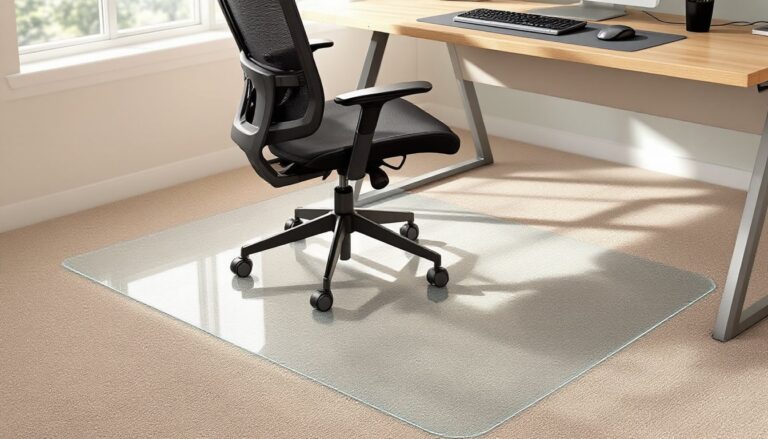
Rolling across plush carpet in an office chair is rough on both the flooring and your wheels. The constant friction wears down carpet fibers, creates uneven divots, and makes every movement feel like pushing through sand. A quality chair mat solves all three problems, it protects the carpet, extends its lifespan, and gives casters a smooth, hard surface to glide across. Whether someone’s setting up a dedicated home office or carving out workspace in a spare bedroom, choosing the right mat means understanding materials, pile height compatibility, and sizing. Here’s what actually matters when shopping for a carpet chair mat in 2026.
Table of Contents
ToggleKey Takeaways
- A quality office chair mat for carpet protects fibers from permanent damage, extends carpet lifespan by years, and reduces rolling resistance by up to 80% compared to bare carpet.
- Choose polycarbonate mats for long-term durability (5+ years) under heavier chairs, and PVC mats for budget-conscious buyers planning light-to-medium use lasting 2–3 years.
- Match the cleat length to your carpet pile height: ½” cleats for high-pile carpet, ⅜” for medium-pile, and ¼” for low-pile or commercial-grade carpet.
- Measure the full range of chair movement—including back, swivel, and leg extension—and add 6–12 inches in each direction when sizing your mat to ensure complete coverage and safety.
- Vacuum the carpet before installation, let the mat acclimate for 24 hours, and press firmly along edges to seat the grippers; maintain it with weekly vacuuming and immediate spill cleanup to maximize performance.
Why Your Home Office Carpet Needs a Chair Mat
Office chairs with casters, especially those carrying 150–250 pounds of combined user and seat weight, compress carpet fibers with every roll and pivot. Over months, this creates permanent track marks and flattened spots that won’t bounce back, even with professional cleaning. The issue is worse on medium- to high-pile carpets, where the wheels sink deeper and grind fibers against the backing.
A chair mat distributes weight evenly across its surface, eliminating point pressure. This keeps the carpet looking uniform and extends its replacement timeline by years. Mats also reduce rolling resistance by up to 80% compared to bare carpet, which means less strain on the user’s back and legs when repositioning. For anyone spending four-plus hours a day at a desk, that difference is noticeable by the end of the week.
Without a mat, caster wheels accumulate lint and fibers, which gum up the bearings and make rolling even harder. The mat acts as a barrier, keeping debris out of the wheel mechanism and maintaining smooth movement. It’s a simple fix that prevents both flooring damage and premature chair wear.
Top Features to Look for in a Carpet Chair Mat
Not all mats are built for carpet. The key differentiator is the gripper or cleat system on the underside. Carpet mats use short, blunt spikes (usually ¼” to ½” long) that anchor into the pile without puncturing the backing. These cleats prevent the mat from sliding during use, which is critical on plush or loop-pile surfaces. Hard floor mats lack these grippers and will slip on carpet, so they’re not interchangeable.
Thickness matters for durability and performance. Look for mats between 2.5mm and 3.5mm thick. Thinner options (under 2mm) tend to crack under repeated chair weight, especially on carpet where the surface underneath isn’t perfectly flat. Thicker mats hold up better but can feel slightly less stable on very high-pile carpet.
Material composition determines longevity and clarity. Polycarbonate mats are the most durable and resist cracking and yellowing for years, but they cost more upfront. PVC mats are budget-friendly and work well for light- to medium-duty use, though they may develop stress cracks after 18–24 months of daily rolling. Some manufacturers add UV stabilizers to prevent discoloration in rooms with direct sunlight, which is worth checking if the desk sits near a window.
Finally, edge design impacts safety and usability. Straight-cut edges can curl over time, creating a trip hazard. Beveled or rounded edges lie flatter and transition smoothly from mat to carpet. Some mats also feature a lip extension that tucks under the desk to protect carpet in the footwell area, which is helpful for users who frequently cross their legs or shift their feet.
Our Top Picks: Best Office Chair Mats for Carpet
For high-pile carpet (¾” or thicker): A polycarbonate mat with ½” cleats is the most reliable choice. These mats stay anchored even on plush, soft surfaces and won’t buckle under heavy executive chairs. Expect to pay $80–$150 for a 36″ x 48″ size. The extra investment pays off in durability, polycarbonate mats routinely last five-plus years without cracking.
For medium-pile carpet (½” to ¾”): A mid-grade PVC mat with ⅜” cleats handles daily use well and costs $40–$70 for standard sizes. These mats offer a good balance of grip and affordability, though users should avoid dragging heavy furniture across them, as PVC is more prone to surface scratches than polycarbonate. Product testing labs regularly evaluate chair mats for wear resistance and cleat durability, which helps narrow the field.
For low-pile or commercial-grade carpet (under ½”): A thinner polycarbonate mat (around 2.5mm) with shorter ¼” cleats works well. The lower pile means less cleat depth is needed for stability, and the thinner mat profile reduces the height transition from carpet to mat. This setup is also suitable for home offices with Berber or loop-pile carpet, where longer cleats can snag fibers.
For budget-conscious buyers: A basic PVC mat in a standard rectangular shape (36″ x 48″ or 45″ x 53″) is perfectly functional for light use, think a couple hours of evening work or weekend tasks. These mats cost $25–$40 and will show wear faster, but they’re easy to replace and handle occasional rolling without issue. Skip the ultra-cheap options under $20: they’re often too thin and crack within months.
Polycarbonate vs. PVC: Which Material Is Right for Your Carpet?
Polycarbonate is a rigid, impact-resistant plastic originally developed for applications like bulletproof glass and safety goggles. In chair mats, it offers superior clarity (stays transparent rather than clouding), high tensile strength, and resistance to cracking under repeated stress. Polycarbonate handles temperature fluctuations well, so it won’t become brittle in cold home offices or soften in warm rooms. The trade-off is cost, polycarbonate mats typically run 50–100% more than comparable PVC options.
Polycarbonate is the right choice for daily, multi-year use, especially under heavier chairs (over 200 pounds total load) or in rooms where the mat needs to handle frequent repositioning. It’s also the better pick for anyone who wants a crystal-clear mat that won’t yellow or discolor over time, which matters if the carpet underneath has a pattern or color worth showing off. Many modern office designs favor transparent mats that don’t visually interrupt flooring.
PVC (polyvinyl chloride) is a softer, more flexible plastic that’s easier to manufacture and hence cheaper. PVC mats work well for lighter-duty applications and are often available in a wider range of shapes and sizes. They’re more prone to developing micro-cracks along stress points (especially near the chair’s most frequent resting position) and can yellow when exposed to UV light. That said, a quality PVC mat with UV stabilizers will still give 2–3 years of solid performance in a typical home office.
PVC makes sense for users on a tighter budget, those working shorter hours at the desk, or anyone who plans to replace the mat in a couple of years anyway. It’s also a practical option for temporary setups, like a rental property or a workspace that might relocate in the near future. Both materials are recyclable, though polycarbonate recycling infrastructure is less widespread than PVC.
How to Choose the Right Size and Shape for Your Workspace
Measure the full range of chair movement, not just the desk footprint. Sit in the chair, roll back to the farthest comfortable distance, then swivel side to side. Add 6–12 inches in each direction to account for occasional overreach or leg extension. A mat that’s too small forces the user to constantly reposition or risk rolling off the edge, which defeats the purpose.
Standard rectangular mats come in common sizes like 36″ x 48″, 45″ x 53″, and 48″ x 60″. The 36″ x 48″ works for compact desks or corner setups where space is tight. The 45″ x 53″ is the most versatile for typical home office desks (48–60 inches wide), and the 48″ x 60″ suits larger L-shaped or executive desks. For anyone planning a complete home office setup, it’s worth measuring before buying the mat to ensure proper fit.
L-shaped or T-shaped mats cover both the main desk area and an adjacent return or side table. These are useful for multi-monitor setups or workspaces that include a printer stand or filing cabinet within rolling distance. They typically cost 20–30% more than rectangular mats of similar total area but eliminate the need for two separate pieces.
Lip extensions add 10–20 inches of coverage under the desk for footwell protection. This feature is helpful on higher-pile carpet where feet and shoes can cause wear even without chair movement. If the desk has a modesty panel or drawers that limit legroom, a lip extension may not fit comfortably, so check clearance before ordering.
For non-standard spaces, some manufacturers offer custom-cut mats based on submitted dimensions or templates. This option is pricier (often $150+) but works well for oddly shaped rooms, curved desks, or setups with built-in cabinetry. When in doubt, round up on size, an extra few inches of coverage won’t hurt, but a mat that’s too small is frustrating to use.
Installation Tips and Maintenance Best Practices
Before laying the mat, vacuum the carpet thoroughly to remove loose dirt, pet hair, and debris. Any particles trapped under the mat will create uneven spots and can work their way into the cleats, reducing grip. For new mats, unroll or unpack them and let them acclimate to room temperature for 24 hours if stored in a cold garage or delivered in winter. This prevents warping or curling when the material expands.
Position the mat with cleats facing down, then press firmly along the edges and center to seat the grippers into the carpet pile. Walk across the mat to ensure it’s stable and doesn’t shift when weight is applied. If the mat slides, the cleats may be too short for the pile height, consider a mat with longer grippers or check that it’s specifically rated for carpet rather than hard floors.
For ongoing care, vacuum the mat surface weekly using a hard floor setting (no beater bar). This removes dust and prevents grit from scratching the plastic. Wipe spills immediately with a damp cloth and mild detergent: avoid ammonia-based cleaners, which can cloud polycarbonate. For deeper cleaning, lift the mat every few months and vacuum the carpet underneath to prevent compressed fibers from staying matted.
If the mat develops a curl along one edge, place a flat, heavy object (like a stack of books) on the affected area overnight to flatten it. Persistent curling usually means the mat is too thin for the application or has reached the end of its service life. Polycarbonate mats rarely curl unless damaged, but PVC mats may need this occasional adjustment.
Safety note: Always wear shoes or slippers when stepping onto a chair mat from carpet, especially on stairs or transitions. The sudden change from soft to hard surface can catch users off guard, and mat edges, even beveled ones, can present a minor trip hazard in low light. Interior design guides often recommend using a contrasting rug or runner to visually mark the mat boundary in larger rooms.
Conclusion
A well-chosen chair mat protects carpet, improves mobility, and pays for itself by extending flooring life. Polycarbonate delivers the best long-term performance, while PVC offers solid value for lighter use. Match the cleat length to carpet pile height, size the mat to the full work area, and don’t skip the acclimation step. With proper installation and basic upkeep, a quality mat will keep both the chair and carpet in working order for years.