Working from home is no longer a temporary arrangement, it’s the new normal for millions of renters. But when you’re dealing with limited square footage, carving out a functional office can feel impossible. Good news: you don’t need a spare bedroom or a sprawling floor plan to create a productive workspace. With smart planning, the right furniture, and a few strategic design moves, even a studio apartment can accommodate a serious home office. This guide breaks down exactly how to set up an efficient apartment office that doesn’t sacrifice comfort or style, even when space is at a premium.
Table of Contents
ToggleKey Takeaways
- A dedicated apartment office improves focus, reduces distractions, and creates essential psychological boundaries between work and home life for renters.
- Choose office locations with natural light, minimal foot traffic, and adequate electrical access—unconventional spots like hallways or closets can work better than obvious choices.
- Wall-mounted floating desks, Murphy desks, and ladder desks are ideal space-saving solutions for apartment offices that prioritize portability and non-permanent installation.
- Vertical storage through floating shelves, pegboards, and wall-mounted rails keeps your desktop clear while making small spaces feel larger and more organized.
- Proper lighting layering (ambient, task, and accent) combined with ergonomic chair setup, monitor positioning, and keyboard placement prevents fatigue and boosts long-term productivity.
- Minimal, light-colored design with one large statement piece, strategic cable management, and a single pothos plant creates an inspiring apartment office without visual clutter.
Why Creating a Dedicated Office Space in Your Apartment Matters
A dedicated workspace isn’t just a nice-to-have, it’s essential for productivity and mental separation between work and home life. Studies consistently show that having a defined work zone improves focus, reduces distractions, and signals to your brain when it’s time to shift into professional mode.
In rental spaces, this becomes even more critical. Without physical boundaries between living and working areas, it’s easy to fall into bad habits: answering emails from the couch, working late into the evening from the dining table, or never truly “leaving” the office. A designated workspace, even a small corner, creates psychological boundaries that help maintain work-life balance.
For renters, there’s another practical consideration: portability. Unlike homeowners who can invest in built-ins or permanent fixtures, apartment dwellers need solutions that can move with them. The strategies outlined here prioritize non-permanent installations, damage-free mounting options, and furniture that transitions easily to a new space. This approach protects your security deposit while giving you the flexibility to adapt your setup as your living situation changes.
Choosing the Perfect Location for Your Apartment Office
Location dictates everything: available light, noise levels, and how well you can separate work from relaxation. Start by surveying your entire apartment with a critical eye, looking beyond the obvious spots.
The best apartment office locations typically share three characteristics: natural light, minimal foot traffic, and adequate electrical access. North-facing windows provide consistent, indirect light throughout the day without harsh glare. If you’re stuck with south or west exposure, budget for blackout shades or adjustable blinds to manage afternoon sun.
Unconventional spaces often work better than expected. A wide hallway can accommodate a narrow console desk (look for depths of 12-18 inches). Closets, especially those 4-6 feet wide, can be converted into “cloffices” by removing the doors and installing a floating desk at standard height (28-30 inches from the floor). Even a corner of the bedroom works if you can position the desk to face away from the bed, maintaining visual separation.
Avoid placing your office in high-traffic zones like near the entryway or directly adjacent to the kitchen. The constant movement and noise will tank your concentration. If your only option is a shared space, consider using a folding screen or bookshelf as a room divider to create a visual barrier. Many design-focused retailers offer these solutions, and platforms like Houzz showcase countless small-space office setups for inspiration.
Measure your chosen spot carefully before buying anything. You’ll need at minimum 24 inches of depth for a functional desk, 36-48 inches of width for a comfortable work surface, and enough clearance (about 36 inches) to pull your chair back and move around comfortably.
Space-Saving Furniture Solutions for Small Apartment Offices
Compact Desks and Wall-Mounted Options
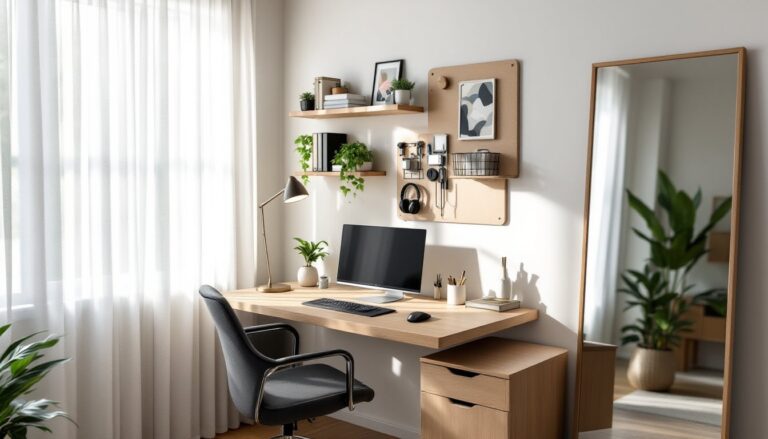
Forget oversized executive desks. In a small apartment, every inch counts, and your desk should reflect that reality. Wall-mounted floating desks are the gold standard for tight spaces, they provide a solid work surface without the visual bulk of traditional legs and can be installed at exactly the right height for your body.
When shopping for a wall-mounted desk, verify your wall type first. Drywall requires anchoring into studs or using heavy-duty toggle bolts rated for at least 50 pounds per anchor. Most floating desks attach with a cleat system or bracket supports mounted directly to studs. If you’re renting, check your lease, some landlords prohibit wall mounting, while others allow it with proper patching upon move-out.
Alternatively, Murphy desks fold up completely when not in use, disappearing into a cabinet or wall unit. These work exceptionally well in studio apartments or multipurpose rooms. Look for models with integrated storage so your work materials stay organized even when the desk is closed.
For non-permanent solutions, consider ladder desks (they lean against the wall without mounting) or compact writing desks with minimal footprints. A good benchmark: aim for a desk surface between 40-48 inches wide and 20-24 inches deep. That’s enough room for a laptop, an external monitor, and basic supplies without overwhelming the room.
Skip glass tops in small spaces, they show every smudge and fingerprint. Opt instead for finished plywood, laminate, or solid wood surfaces that age well and handle daily use.
Smart Storage Ideas to Maximize Vertical Space
In small apartments, the wall is your best friend. Vertical storage keeps your desktop clear and draws the eye upward, making the room feel larger.
Start with floating shelves installed above your desk. Arrange them in asymmetric patterns for visual interest, or use a simple stacked configuration for maximum capacity. Shelves should be 10-12 inches deep for books and binders, 8 inches for smaller office supplies. Mount them with proper wall anchors, each shelf should support at least 25-30 pounds when fully loaded.
Pegboard systems offer incredible flexibility for renters. Install a large pegboard panel (4×4 feet or 2×4 feet) on the wall behind your desk using French cleats or removable adhesive strips rated for the weight. You can rearrange hooks, baskets, and shelves as your needs change. Paint the pegboard to match your wall color or use it as an accent feature.
Rolling file cabinets that tuck under the desk provide concealed storage without permanent installation. Look for models 15-18 inches wide that fit standard hanging file folders. This keeps paperwork accessible but out of sight.
For frequently used items, consider a wall-mounted rail system with S-hooks. These are popular in kitchens but work brilliantly for office supplies, hang scissors, headphones, charging cables, or small bins. The entire system can be removed and patched with minimal damage.
Don’t overlook the back of your office door. Over-the-door organizers with pockets or hooks can hold notebooks, chargers, or reference materials. Choose fabric or metal versions over plastic for durability. Urban apartments often showcase creative storage solutions that maximize every available surface without major renovations.
Lighting and Ergonomics: Creating a Comfortable Work Environment
Poor lighting and bad posture will wreck your productivity faster than a slow internet connection. Treat both seriously from day one.
Lighting layering is non-negotiable in a functional office. You need three types: ambient (overhead or general room light), task (direct light on your work surface), and accent (optional, for reducing screen glare and eye strain). If your apartment has weak overhead lighting, add a floor lamp with a 3-way bulb (50/100/150 watts equivalent LED) positioned behind and to the side of your monitor.
For task lighting, use a LED desk lamp with adjustable brightness and color temperature. Look for models offering 3000K-4000K (warm white to neutral) for balanced lighting that doesn’t skew too cool or warm. Position the lamp opposite your dominant hand to avoid casting shadows while writing.
Avoid placing your desk directly in front of or behind a window. Both create screen glare and force your eyes to constantly adjust between bright and dark zones, causing fatigue. Instead, position your desk perpendicular to windows so natural light comes from the side.
Ergonomics can’t be skipped, even in a tiny office. Your monitor should sit at arm’s length, with the top of the screen at or slightly below eye level. If you’re using a laptop, invest in a laptop stand (raises the screen 4-6 inches) and a separate keyboard and mouse. This setup costs $50-75 but prevents neck and shoulder strain.
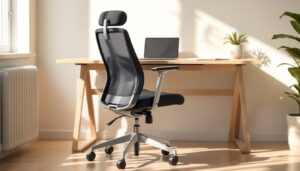
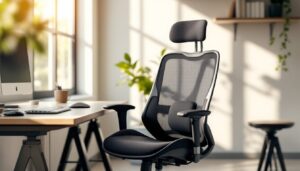
Your chair matters more than your desk. A proper task chair with adjustable seat height, lumbar support, and armrests is worth the investment. Your feet should rest flat on the floor with knees at 90 degrees, and your forearms should be parallel to the floor when typing. If your chair doesn’t adjust low enough, add a footrest (a simple 4-inch platform works).
Keyboard and mouse placement: both should be at the same height, close enough that your elbows stay near your sides. If you’re experiencing wrist pain, consider a split ergonomic keyboard or a vertical mouse, both reduce strain on tendons.
Wear your safety glasses if you’re doing any drilling or mounting during setup, drywall dust and metal shavings can cause serious eye injuries. This applies to installing shelves, hanging lights, or assembling furniture.
Design Tips to Make Your Apartment Office Feel Spacious and Inspiring
Small spaces demand intentional design. Every choice, color, scale, placement, either opens up the room or makes it feel cramped.
Light, neutral colors on walls and large furniture pieces make a small office feel larger. White, light gray, soft beige, or pale blue reflect more light and create visual continuity. If you’re renting and can’t paint, use peel-and-stick wallpaper on an accent wall or behind your desk to add personality without a long-term commitment. Geometric patterns or subtle textures work better than busy florals in tight quarters.
Scale matters. Oversized art or a single large plant looks more sophisticated than a cluster of small objects, which create visual clutter. A single 24×36-inch framed print has more impact than a gallery wall of six small frames.
Mirrors are a designer’s trick for doubling perceived space. Position a large mirror (30×40 inches or bigger) opposite a window to bounce natural light around the room. Avoid placing mirrors directly behind your monitor, the reflections will distract during video calls.
Cable management might seem minor, but tangled cords kill the clean aesthetic you’re working toward. Use cable clips, velcro ties, or a cable management box to corral power strips and excess cord length. Run cables along the back edge of your desk or along baseboards using adhesive cable channels. The result looks professional and makes cleaning easier.
Incorporate biophilic elements, plants, natural materials, or nature-inspired colors, to reduce stress and improve air quality. A single pothos or snake plant in a 6-8 inch pot adds life without demanding much maintenance or space. Both tolerate low light and irregular watering.
Keep your desktop minimal. Only items you use daily should live on the surface: monitor, keyboard, mouse, and maybe a lamp. Everything else goes in drawers or on shelves. This “clear desk policy” reduces visual distraction and makes the space feel larger. Resources like Apartment Therapy regularly feature small-space offices that balance function with visual appeal.
Finally, add one or two personal touches, a favorite photo, a small sculpture, or a meaningful object. Your office should feel like your space, not a generic corporate cube. But be selective. In a small apartment, one great piece beats five mediocre ones every time.
With these strategies, even a 50-square-foot corner can become a productive, comfortable workspace that genuinely supports your work. The key is intentionality: choose every piece deliberately, install it properly, and resist the urge to cram in more than the space can handle. Done right, your apartment office becomes a functional asset rather than a cluttered afterthought.