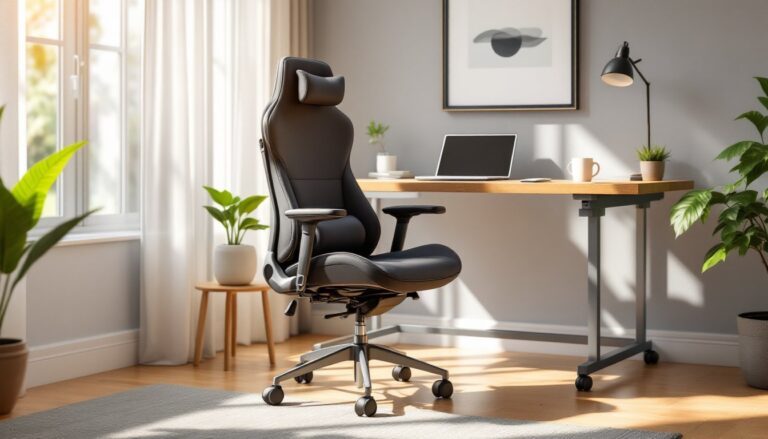
Sitting for eight hours a day in a chair built for someone half your size isn’t just uncomfortable, it’s a recipe for chronic back pain, poor circulation, and wasted money on replacements. Standard office chairs max out around 250 pounds and 18-inch seats, leaving bigger users perched on armrests or dealing with crushed cushions within months. A proper big and tall ergonomic office chair isn’t a luxury: it’s essential equipment for anyone who works from home and needs a seat that won’t fail halfway through a mortgage approval call or a design rendering marathon.
Table of Contents
ToggleKey Takeaways
- A proper big and tall ergonomic office chair requires weight capacity of at least 350 pounds, reinforced steel frames, and a wider seat pan (20-24 inches) to properly support larger users and prevent chronic back pain.
- Seat dimensions and adjustability are critical: look for 22-inch width with adjustable lumbar support, four-way adjustable armrests, and extended-height cylinders (23-24 inches) to accommodate taller users who need proper thigh-to-hip alignment.
- Correct setup is essential to maximize chair benefits—adjust seat height so thighs are parallel to the floor, position lumbar support at your lower back curve, and set armrest height to keep shoulders relaxed at 90-degree elbow angles.
- Verify manufacturer weight ratings and BIFMA certification on official websites rather than trusting third-party sellers, as inflated capacity claims and misleading “executive” or “high-back” labels can lead to premature failure and wasted investment.
- Match caster type to your flooring (hard plastic for carpet, soft rubber for hardwood) and measure doorways before ordering to ensure delivery and proper installation in your workspace.
Why Big and Tall Office Chairs Need Special Ergonomic Features
Standard office chairs follow a one-size-fits-most design philosophy that ignores basic physics. A 300-pound user generates nearly double the compressive force on seat foam and casters compared to a 150-pound user, which explains why “heavy-duty” labels mean nothing without reinforced frames.
Big and tall chairs require wider seat pans (typically 20-24 inches versus the standard 17-19 inches) to distribute weight across a larger surface area and prevent pressure points on the thighs. Narrow seats force users to perch forward, collapsing lumbar support and turning ergonomic features into decorative trim.
Weight capacity ratings aren’t suggestions, they’re engineering limits. A chair rated for 250 pounds will experience accelerated wear at 275 pounds, starting with sagging mesh, compressed foam, and eventually cracked plastic components. Look for chairs rated at least 50 pounds above your actual weight to account for dynamic loading when you shift position or lean back.
Taller users face different geometry problems. A 6’4″ person sitting in a chair designed for someone 5’9″ ends up with knees higher than hips, tilting the pelvis backward and flattening the natural lumbar curve. This is why seat depth adjustment and extended cylinder heights matter as much as weight ratings.
Essential Ergonomic Features to Look for in Big and Tall Chairs
Shopping by price or aesthetic is how you end up with a $400 chair that hurts as much as a folding metal one. Here’s what actually matters.
Weight Capacity and Frame Construction
Start with the rated weight capacity, anything under 300 pounds is a standard chair with marketing spin. True big and tall models range from 350 to 500+ pounds and use fundamentally different construction.
Steel frames beat plastic every time for load-bearing components. Check the chair base (the star-shaped part with casters): reinforced nylon or aluminum bases with at least 27.5 inches diameter provide stability without tipping. Class 4 gas cylinders (the pneumatic post) handle higher weight ranges and won’t sink mid-Zoom call like Class 2 or 3 cylinders common in budget chairs.
Casters matter more than most spec sheets admit. Standard 2-inch plastic wheels sink into carpet and gouge hardwood under heavy loads. Rollerblade-style wheels or 3-inch casters distribute weight better and move smoothly across most flooring without requiring a mat.
Many home office furniture plans focus on desks and shelving, but matching chair height to desk surface matters, standard desk height is 29-30 inches, so verify your chair’s height range accommodates both your inseam and desktop clearance.
Seat Dimensions and Adjustability Options
Seat width and depth are non-negotiable measurements. A 22-inch wide seat with 20-22 inches of depth fits most big and tall users without thigh overhang or pressure behind the knees. Waterfall edge design (gently curved front edge) prevents circulation cutoff.
Adjustable lumbar support, both height and depth, is critical. Fixed lumbar pads align properly for maybe 40% of users. Look for chairs where the lumbar cushion moves vertically at least 3 inches and pushes forward at least 1.5 inches to match your spine’s natural curve.
Armrests need four-way adjustment: height, width, depth, and angle. Width-adjustable arms are especially important for broader shoulders, fixed-width arms either dig into your ribs or sit uselessly far away. Armrests should allow your elbows to rest at 90 degrees while keeping shoulders relaxed, not hunched up or stretched wide.
Recline tension and tilt lock let you lean back without launching yourself backward. Chairs with synchro-tilt mechanisms move the seat and backrest in coordinated ratios (typically 2:1), which maintains better posture than free-float designs. A tilt lock that engages at multiple angles, not just fully upright, adds real versatility.
Seat height range matters for tall users. Standard cylinders max out around 21 inches from the floor: extended-height cylinders reach 23-24 inches. If you’re over 6’2″, verify the maximum height allows your feet to rest flat with thighs parallel to the floor.
How to Set Up Your Big and Tall Ergonomic Chair for Maximum Comfort
Buying the right chair is half the job. Setup determines whether those features actually work.
Start with seat height. Sit with feet flat on the floor and adjust the cylinder until your thighs are parallel to the ground or angled slightly downward (knees 1-2 inches lower than hips). If your desk is too high, raise the chair and add a footrest, never sit with knees higher than hips.
Adjust seat depth next if your chair offers it. Slide the seat pan until there’s 2-4 inches of clearance between the front edge and the back of your knees. Too much depth and you’ll slouch forward to use the backrest: too little and your thighs hang off the edge.
Set lumbar support height by locating the curve in your lower back (usually around belt level). Position the lumbar cushion so it fills that curve without pushing you forward. Then adjust depth: it should support the curve, not flatten it or force you to sit on the front edge.
Armrest height should allow your shoulders to relax in a neutral position with elbows bent at 90-100 degrees. If armrests force your shoulders up, you’ll develop neck tension. If they’re too low, you’ll lean to one side. Adjust width so your arms rest comfortably without splaying your elbows or pinching your torso.
Recline tension controls how much force it takes to lean back. If you’re heavier, you’ll need to tighten the tension knob (usually under the seat, right side) to prevent the chair from reclining too easily. Test by leaning back, you should engage core muscles slightly, not freefall.
Many modern design enthusiasts prioritize aesthetics, but ergonomic setup trumps appearance. A perfectly adjusted chair in a utilitarian finish beats a stylish one that forces poor posture.
After initial setup, spend a week making micro-adjustments. Your body adapts to new support, and what feels perfect on day one might need tweaking by day five. If something hurts, adjust one variable at a time and give it 2-3 days before changing another setting.
Common Mistakes to Avoid When Choosing a Big and Tall Office Chair
Trusting Amazon weight ratings without checking manufacturer specs. Third-party sellers inflate capacities. Always verify weight limits on the manufacturer’s official site, and look for BIFMA (Business and Institutional Furniture Manufacturers Association) certification, which includes tested load standards.
Assuming “executive” or “high-back” means big and tall. These are style descriptors, not load ratings. A high-back chair with a 225-pound limit is still a standard chair with a taller backrest.
Ignoring seat width in favor of weight capacity. A chair rated for 400 pounds with an 18-inch seat will support your weight but crush your hips. Measure yourself sitting, add 2 inches to your hip width for minimum seat width.
Skipping assembly instructions and over-torquing bolts. Hand-tighten bolts until snug, then add a quarter turn with tools. Over-tightening cracks plastic components and strips threads, which voids warranties. Follow torque specs if provided.
Buying mesh backs without testing first. Mesh works great for some users but offers less lumbar support than molded foam or adjustable cushions for others. If you have existing lower back issues, padded backs with adjustable lumbar are usually safer bets.
Placing chairs on uneven surfaces. A gas cylinder on a wonky floor wears unevenly and fails faster. Check that your workspace floor is level, especially on old hardwood or concrete slabs. Shim the desk if needed, not the chair.
Ignoring caster type for your flooring. Hard casters (plastic or nylon) for carpet: soft casters (rubber or rollerblade-style) for hard floors. Using hard casters on hardwood is like rolling a skateboard across your floor eight hours a day.
Platforms like Houzz showcase finished home offices, but behind those photos are chairs properly matched to flooring, desk height, and user dimensions. Aesthetic choices work only after functional requirements are met.
Forgetting to measure doorways and freight elevator dimensions. Big and tall chairs ship in large boxes. A 28-inch-wide box won’t fit through a 24-inch apartment door. Verify dimensions before ordering, especially for walk-up apartments.
Conclusion
A big and tall ergonomic office chair is one of the few home office investments that directly affects productivity and health. Skimping on weight capacity, seat dimensions, or adjustability turns an eight-hour workday into an endurance test. Measure twice, verify manufacturer specs, and prioritize frame construction and adjustability over brand names or aesthetic trends. Your back will thank you by year two when colleagues are shopping for their third replacement chair.